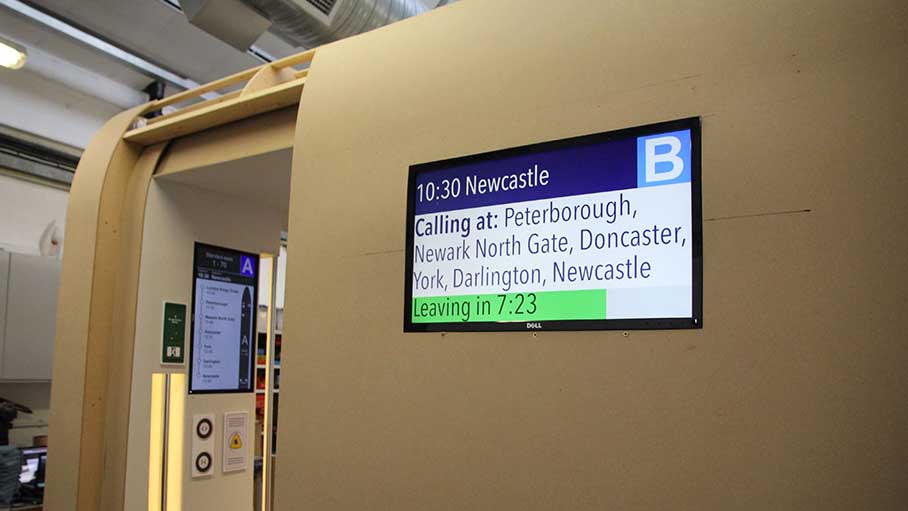
Be-in, Be-out Ticketing
Designing a frictionless rail journey before the product existed
How do you make public transport ticketing almost invisible?
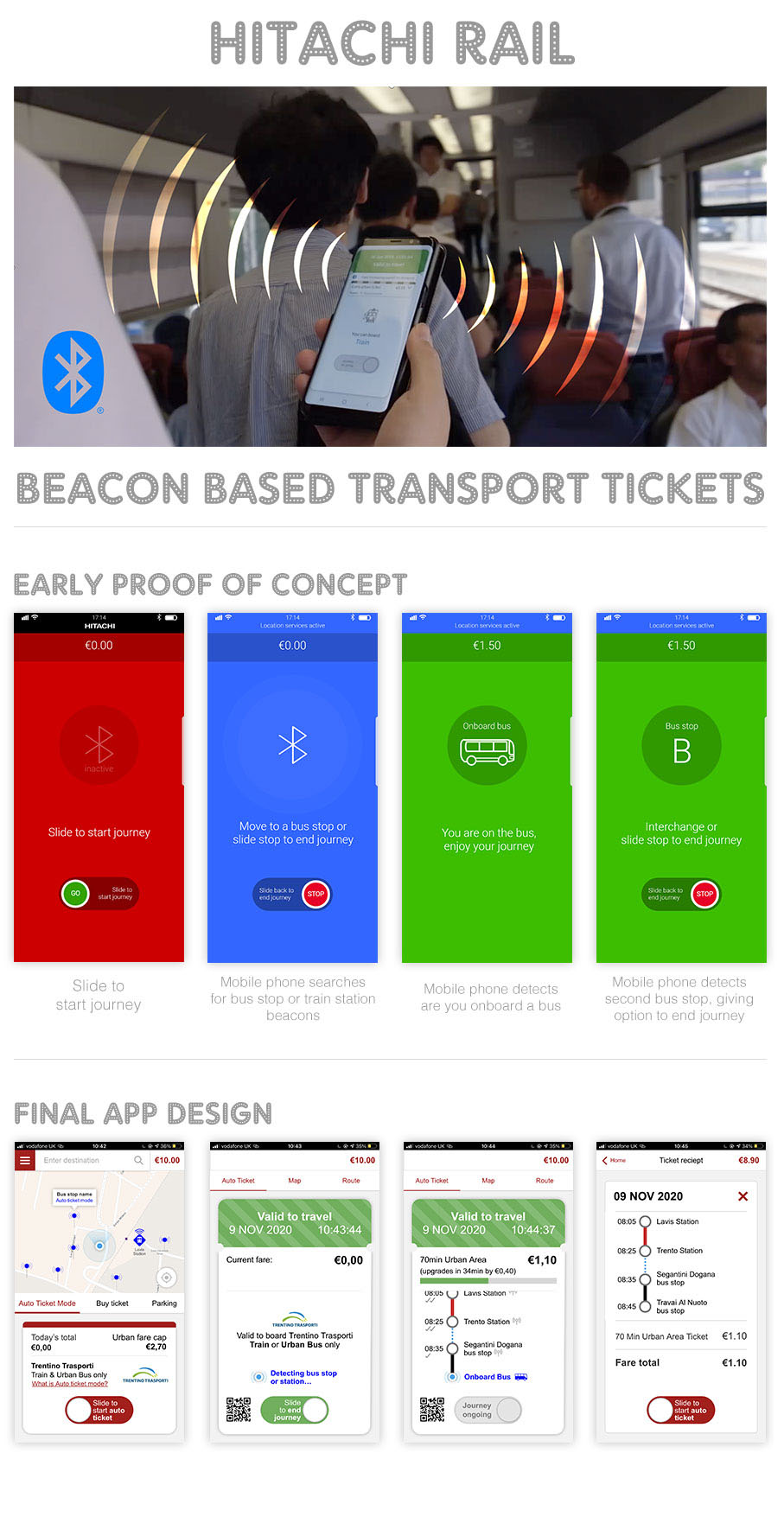
At Hitachi R&D, I worked on Be-in, Be-out (BiBo), a first of a kind ticketing concept using Bluetooth Low Energy beacons to allow passengers to board a train, travel and leave without stopping at a ticket gate or manually validating a ticket.
The technology created the possibility. My role was to work out what the experience should actually be.
The challenge
The engineering concept was relatively straightforward: use BLE beacons to identify where a passenger entered and exited the transport network.
But a real passenger journey is rarely straightforward.
What happens if someone boards the wrong train? What if they change from rail to bus? What if they leave the station somewhere unexpected? What does the passenger understand is happening, and how do they know they have been charged correctly?
Rather than designing around the technical architecture alone, I explored the experience from the passenger’s perspective and challenged assumptions about how the technology would work in the real world.
My role
I worked from the earliest R&D stage, helping translate the underlying technology into a viable passenger experience.
I:
- Conducted user research and explored real passenger behaviours and scenarios.
- Mapped end to end journeys rather than isolated interactions with individual beacons.
- Identified edge cases that were not immediately apparent from the technical model.
- Challenged engineering assumptions about how passengers would interact with the system.
- Developed user journeys, scenarios and service concepts.
- Designed the digital experience surrounding the physical journey.
- Created rapid prototypes and demonstrations to make the concept tangible.
- Worked with engineers to understand technical feasibility and develop the technology architecture.
- Tested and iterated concepts with users.
- Created pitch and presentation material for internal stakeholders and potential customers.
- Worked with Hitachi Rail as the concept progressed towards commercialisation.
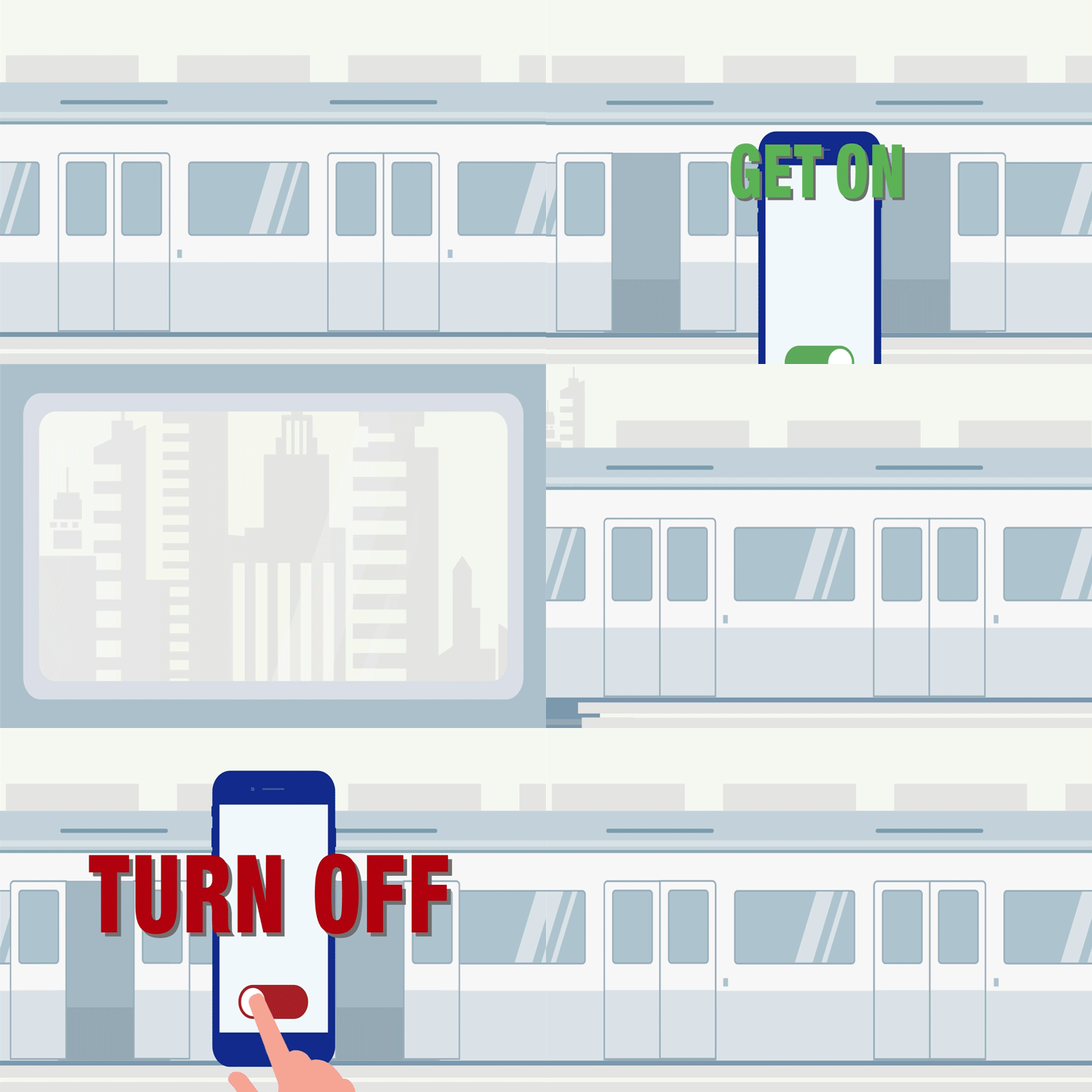
Designing around real world behaviour
One of the important design challenges was that passengers don’t experience a transport system as a series of technical checkpoints.
For example, a passenger might board what they believe is the correct train, realise they have made a mistake, change their journey and continue by bus.
The system still needs to understand the journey.
I helped explore these scenarios and translate them into requirements for how the technology and experience should work together.
This shifted the discussion from:
“Can the beacon detect the passenger?”
to:
“Can the system understand and support the passenger’s actual journey?”
From R&D to commercialisation
This project was not simply a design exercise.
The work progressed from early R&D through concept development, prototyping and validation towards commercial use. I was involved across these stages, working with R&D, engineers, business units and external stakeholders.
The project was also demonstrated publicly, including at InnoTrans in Berlin, and Hitachi Rail subsequently produced a press release about the beacon ticketing work.
What I brought to the project
My contribution sat between technology, people and commercial opportunity.
I translated an emerging technology into:
Technology → scenarios → user journeys → service concept → prototype → validation → product requirements
The result was a transport experience designed around the passenger rather than around the technical architecture.
Skills demonstrated
Product Discovery
UX Research
Service Design
Complex Journey Design
Emerging Technology UX
Hardware + Software Experiences
Rapid Prototyping
Hypothesis Validation
Human-centred Design
Technical Collaboration
Commercialisation
B2B / Transport