Easy Boarding
Using data and behavioural design to improve the railway platform experience
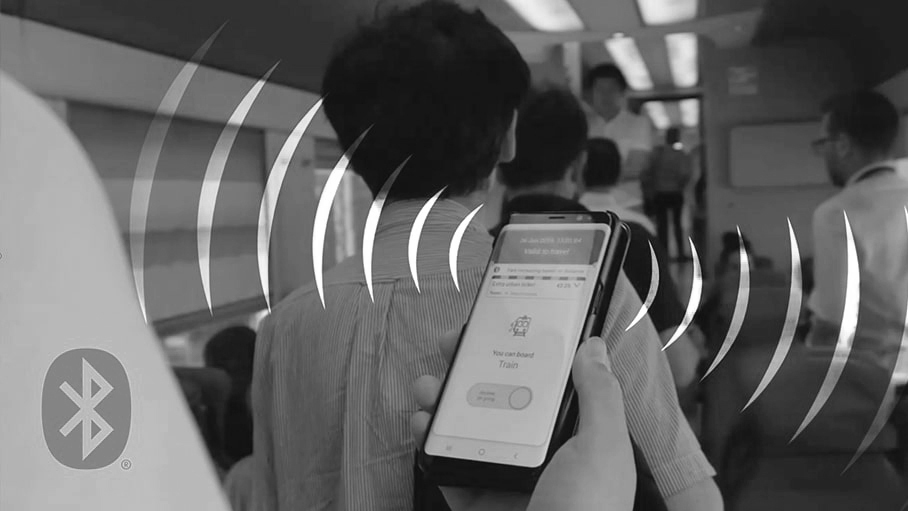
During my time at Hitachi R&D, I developed Easy Boarding, a first of a kind concept exploring how technology could help passengers position themselves more effectively on a railway platform during busy periods.
The objective was simple:
Help passengers board more smoothly while reducing the time trains spend at the platform.
The challenge was understanding how technology could influence behaviour without creating another complicated system for passengers to operate.
The opportunity
During rush hour, passengers naturally gather around familiar positions on a platform.
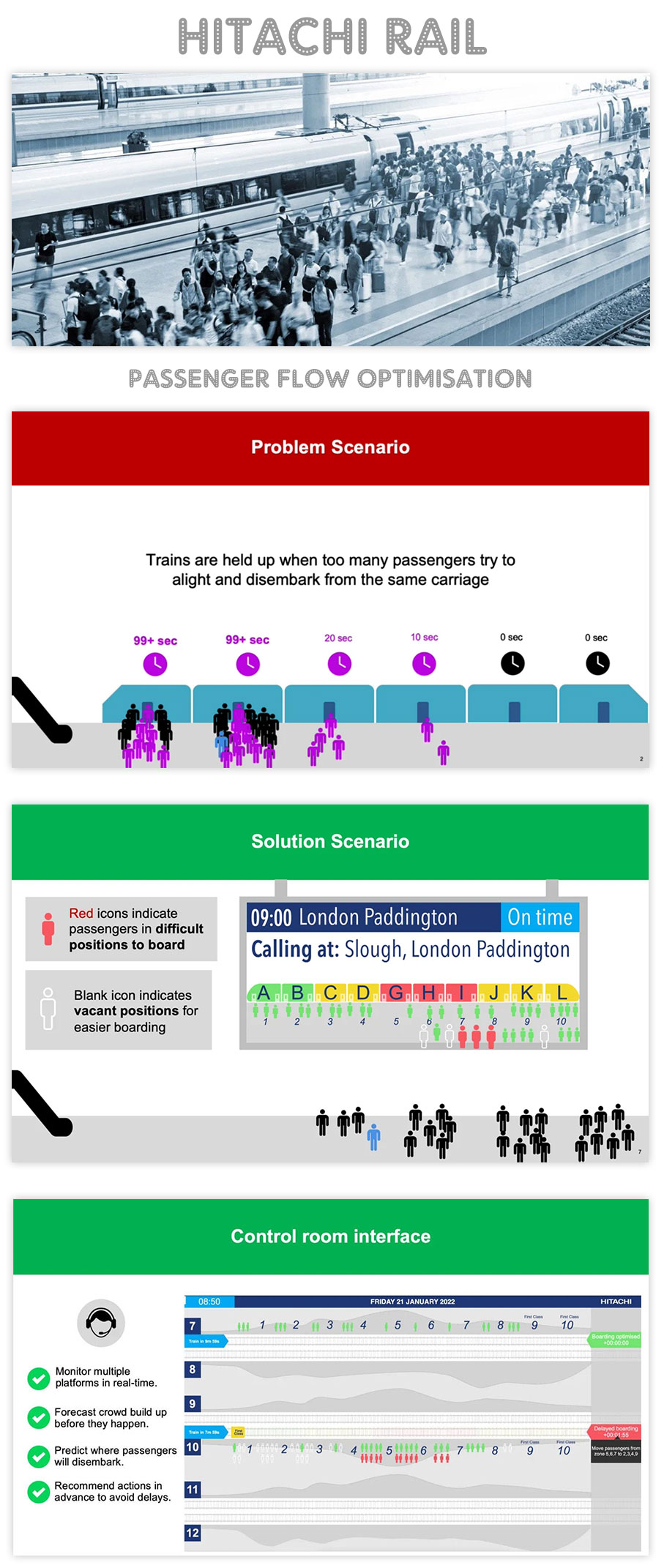
This can create a chain reaction. Passengers waiting to board can block people trying to leave the train, creating congestion around the doors and increasing the time required for passengers to board and alight.
I explored whether existing train and station data, combined with video and behavioural insights, could be used to encourage passengers towards better positions on the platform.
The technology was not the starting point.
The passenger problem was.
Taking the initiative beyond the brief
Rather than relying solely on internal assumptions, I took the initiative to investigate the problem with the wider transport industry.
I travelled to InnoTrans in Berlin, one of the major international transport exhibitions, specifically to identify relevant operators and potential co-creation partners.
I used conversations with transport organisations to test the underlying assumption:
Could better passenger positioning reduce congestion and improve the boarding experience?
These conversations helped me understand the problem from the operator’s perspective as well as the passenger’s.
My role
I took the concept from an initial observation through research, opportunity definition and concept development.
I:
- Identified and framed the passenger flow problem.
- Conducted research with transport professionals and potential partners.
- Explored passenger behaviours in real station environments.
- Developed the Easy Boarding proposition and branded the concept.
- Mapped passenger journeys and platform interactions.
- Explored how video, train and station data could support the experience.
- Developed scenarios showing how the system could influence passenger behaviour.
- Created prototypes and visual demonstrations.
- Worked with technical specialists to understand feasibility.
- Presented the concept to stakeholders and potential partners.
- Used evidence and feedback to refine the proposition.
Designing the complete system
The interesting UX challenge was that the product wasn’t simply an app.
The experience potentially involved:
Passenger behaviour + platform environment + train data + station data + video + information + operational objectives
That meant I had to consider the physical environment as part of the interface.
Instead of asking:
“What screen should we design?”
the question became:
“How can the entire platform experience help passengers make better decisions?”
From passenger behaviour to business value
The concept explored a potential benefit for both passengers and operators.
For passengers, better positioning could mean:
- less chaotic boarding
- a clearer understanding of where to stand
- a greater likelihood of boarding a less crowded carriage
For operators, improved passenger flow could potentially contribute to:
- faster boarding and alighting
- reduced platform dwell time
- more efficient carriage utilisation
- improved operational performance
The concept therefore connected human behaviour, technology and operational value.
What I brought to the project
I turned an observed behavioural problem into a technology opportunity and then explored whether the opportunity could create value for both passengers and transport operators.
The work demonstrates the type of product discovery I carried out throughout Hitachi R&D:
Observe → identify opportunity → research → challenge assumptions → develop concept → prototype → validate → build the case for investment
Skills demonstrated
Product Discovery
UX Research
Behavioural Design
Service Design
Data-driven UX
Physical + Digital Experience Design
Opportunity Qualification
Co-creation
Stakeholder Management
Rapid Prototyping
Innovation Strategy
B2B / Transport